
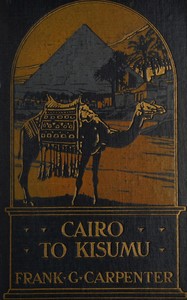
Cairo to Kisumu : Egypt—The Sudan—Kenya Colony by Frank G. Carpenter
Published in 1923, Cairo to Kisumu is Frank G. Carpenter's firsthand account of a journey through Northeast Africa. He wasn't an explorer charting unknown lands, but a journalist and travel writer documenting a world in rapid transition. The book follows his route from the ancient wonders of Egypt, south through the Anglo-Egyptian Sudan (modern Sudan and South Sudan), and finally into the British-controlled Kenya Colony.
The Story
There's no fictional plot, but the narrative is driven by Carpenter's movement and his endless questions. He boards steamships on the Nile, rides the newly built railways, and describes landscapes shifting from desert to savanna. The 'characters' are the people he meets: Egyptian officials, Sudanese merchants, British administrators, and Kenyan farmers. He notes the prices of goods in local markets, describes agricultural methods, and records conversations about politics and daily life. The 'story' is the continent itself, caught between its deep past and an uncertain future shaped by colonialism and global connection.
Why You Should Read It
This book is powerful because it's so immediate. You're right there with him, feeling the heat, navigating the bureaucracy, and witnessing a slice of life that's now gone. It’s not a dry history; it's a sensory experience. You can almost smell the spices in the Khartoum market or hear the train whistle on the Kenyan plains. Reading it today, with our knowledge of what happened in the decades after, adds a profound layer. You see the seeds of future nations and conflicts being sown. It makes you think hard about how we document other cultures and who gets to tell their story.
Final Verdict
Cairo to Kisumu is perfect for readers who love immersive history, armchair travel, or primary sources that feel alive. It's for anyone curious about Africa's colonial era from a ground-level view, not a textbook summary. Be prepared: Carpenter's perspective is a product of its time, and some of his views will rightly make a modern reader pause. But that's part of its value. It doesn't just show you the sights; it shows you the mind of a well-meaning Western observer in the 1920s. Approach it as a fascinating, complex conversation with the past, and you'll be richly rewarded.
This masterpiece is free from copyright limitations. You are welcome to share this with anyone.
Jennifer White
2 years agoI found the author's tone to be very professional yet accessible, the evidence-based approach makes it a very credible source of information. A trustworthy resource that I'll keep in my digital library.
Margaret Jones
2 years agoI found the author's tone to be very professional yet accessible, the narrative arc keeps the reader engaged while delivering factual content. Finally, a source that prioritizes accuracy over hype.
Kimberly Hernandez
5 months agoHaving followed this topic for years, I can say that the clarity of the writing makes even the most dense sections readable. A solid investment for anyone's personal development.
David Davis
6 months agoFrom a researcher's perspective, the quality of the diagrams and illustrations (if applicable) is top-notch. I'm glad I chose this over the other alternatives.





Patricia Smith
1 year agoInitially, I was looking for a specific answer, but the objective evaluation of the pros and cons is very refreshing. I'll be recommending this to my students and colleagues alike.