
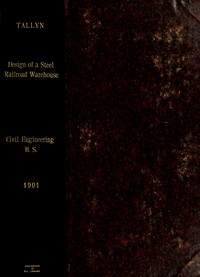
Design of a Steel Railroad Warehouse by Louis Liston Tallyn
Let's be clear from the start: This is not a novel. Louis Liston Tallyn's Design of a Steel Railroad Warehouse is exactly what the title promises—a technical manual from 1910. There are no characters, no plot twists, and definitely no romance. Instead, it walks you through the entire process of designing a specific, crucial piece of infrastructure: a large warehouse built from steel, meant to sit right alongside railroad tracks for efficient loading and unloading.
The Story
The 'story' is the process itself. Tallyn starts with the fundamentals—the weight of the materials it must hold, the impact of wind and snow, the very nature of the ground it will stand on. He then meticulously details how to calculate the stresses on every beam, column, and joint. You get chapters on choosing the right type of steel, designing the roof trusses to shed water and bear weight, and laying out the floor plan for maximum efficiency. It’s a step-by-step guide to creating a giant, functional, and durable machine made of metal. The drama is in the precision; a single miscalculation could mean collapse.
Why You Should Read It
You should read it because it makes the ordinary extraordinary. We drive past old industrial buildings all the time without a second thought. This book forces you to see the incredible thought, physics, and problem-solving embedded in their frames. Tallyn's writing, while technical, has a clear, confident purpose. You can feel his drive to get it right. Reading it is like sitting over the shoulder of a master engineer at the dawn of modern America. It’s a snapshot of a mindset—one of optimism, scale, and a belief that through careful planning, we can build things to last. It turns a simple warehouse into a symbol of an era.
Final Verdict
This book is a niche masterpiece. It's perfect for history buffs, architecture fans, or anyone with an engineering mind who enjoys seeing how things work from the ground up. It's also great for writers seeking authentic period detail about industrial construction. If you need a narrative to pull you along, this isn't it. But if you're curious about the literal nuts and bolts of history and appreciate seeing pure, applied expertise on the page, it's utterly fascinating. Think of it as a time capsule, not a thriller—and a brilliantly revealing one at that.
This text is dedicated to the public domain. It is now common property for all to enjoy.


Kevin Martinez
6 months agoHigh quality edition, very readable.